

Drain Unblocking
Blocked Drains - How to Unblock
Blocked Drains Chepstow – Same-Day Drain Unblocking
A blocked drain can start with something fairly minor — a sink that takes longer to empty, a toilet that doesn't flush properly or water sitting around an outside drain. Leave it alone, however, and the problem can become considerably more unpleasant.
Flow Sure Drains provides drain unblocking in Chepstow and the surrounding area, dealing with blocked toilets, sinks, internal waste pipes and underground drains. We aim to provide a straightforward service: establish what's wrong, explain what needs doing and clear the blockage properly.
We're a family-run drainage company offering fixed-price work where the job can be assessed in advance, no call-out fee and same-day availability where possible.
How do you know if you have a blocked drain?
Not every drainage problem starts with water overflowing.
You might notice:
- A sink or basin draining unusually slowly
- A toilet taking longer than normal to clear
- Gurgling sounds from toilets, sinks or plugholes
- An unpleasant smell coming from a drain
- Water collecting around an outside drain
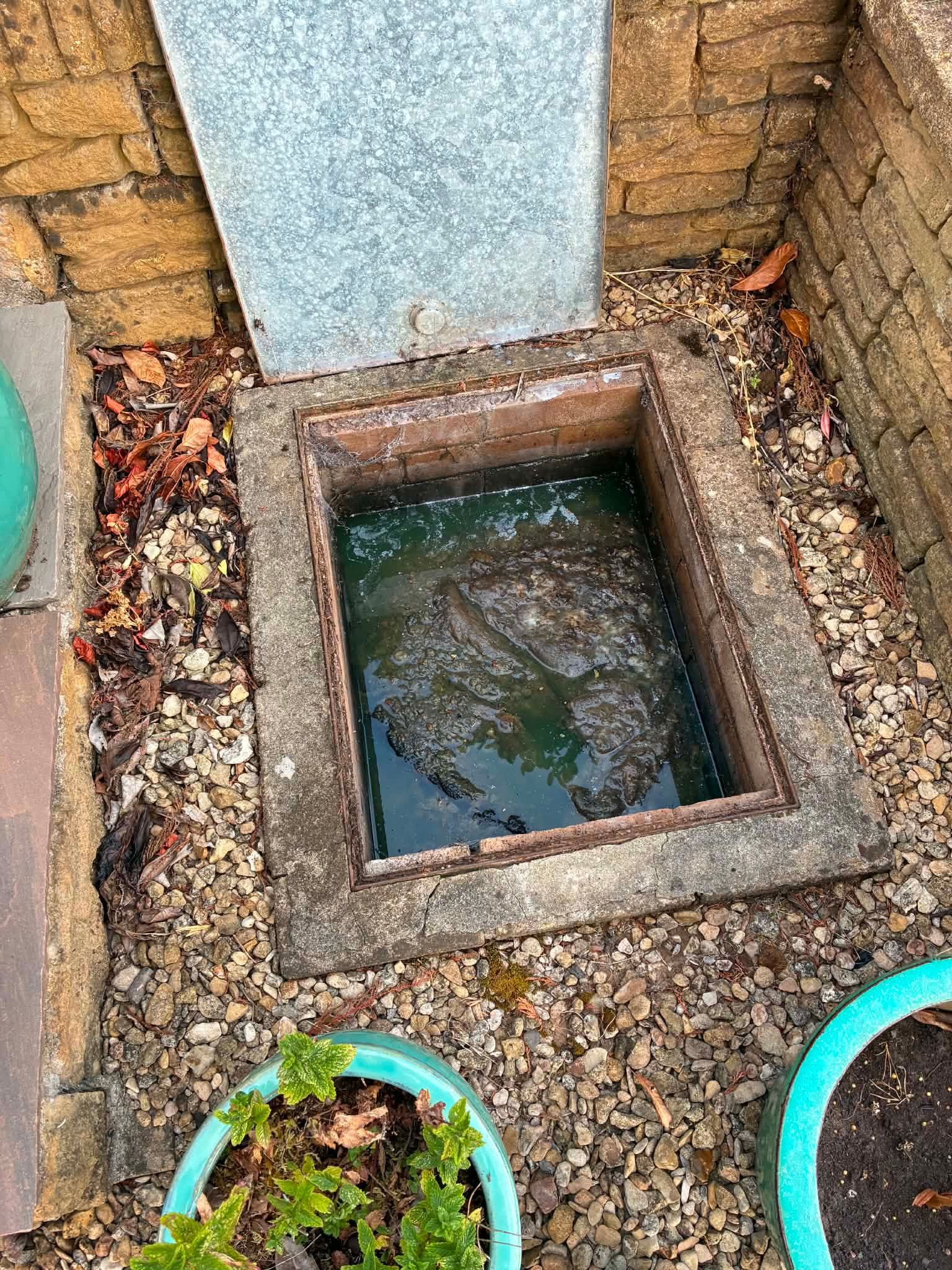
- An inspection chamber filling with water
- Wastewater coming back up when another appliance is used
- Several drains or toilets becoming slow at the same time
One useful clue is whether the problem is affecting one fixture or several.
If only your kitchen sink is slow, the restriction may be in the trap or waste pipe serving that sink. If the toilet, bathroom and outside drainage are all affected, the blockage could be further downstream in the property's drainage system.
That distinction matters because clearing the wrong section of pipe won't solve the underlying problem.
What causes drains to block?
There isn't one universal cause.
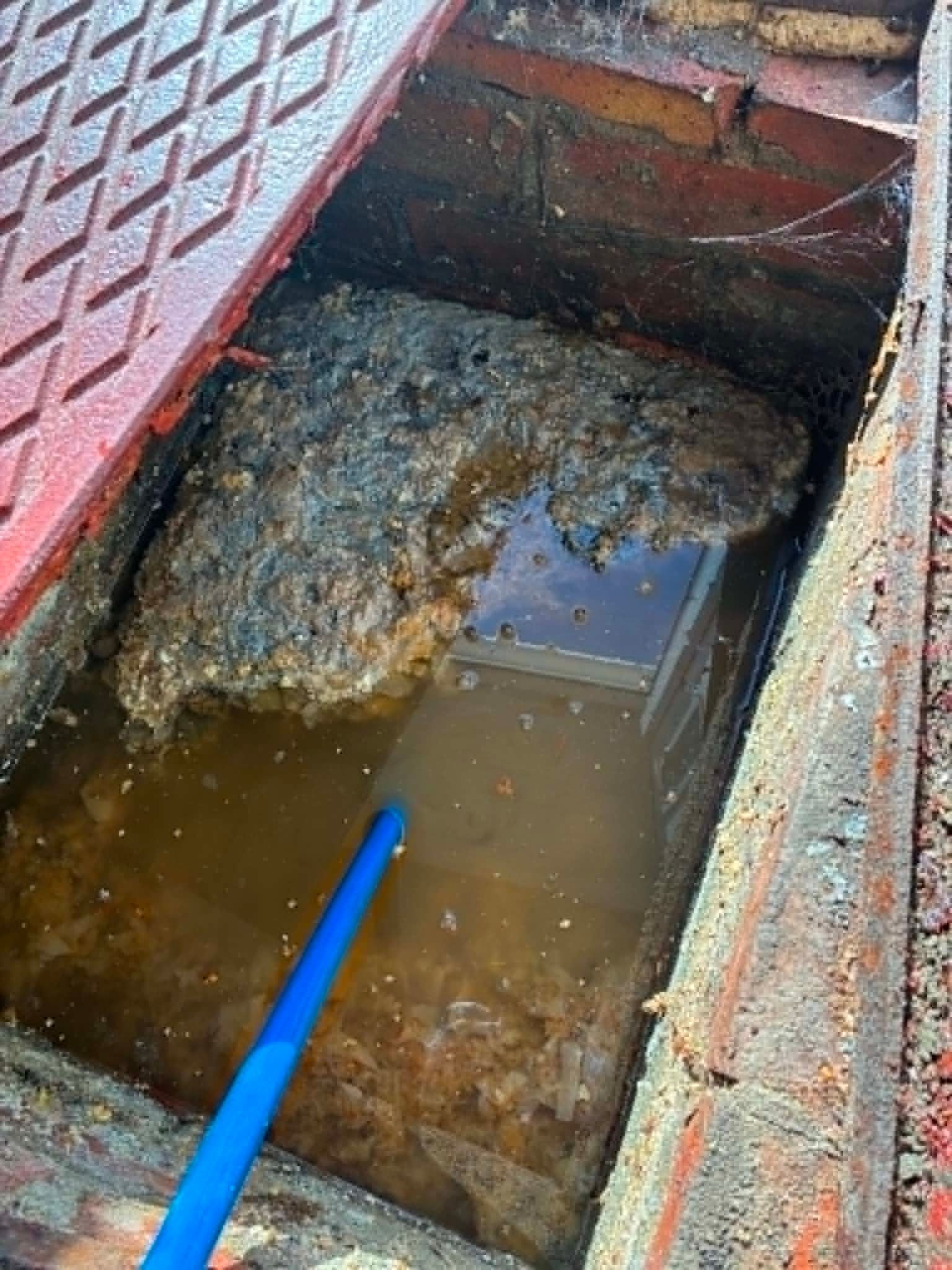
Kitchen waste can gradually accumulate deposits of fat, grease and food debris. Bathroom waste pipes can become restricted by a combination of soap residue, hair and other material.
Underground drains have a different range of potential problems.
These can include:
- A build-up of deposits inside the pipe
- Silt or other material entering the drainage system
- Tree-root ingress
- A displaced or damaged pipe joint
- Cracked or fractured pipework
- A collapsed section of drain
- An obstruction further along the system
- Problems associated with an ageing drainage system
Sometimes a blockage is simply a blockage and can be cleared without further work.
The important question is what happens after it has been cleared.
If the same drain keeps blocking, repeatedly clearing it without finding the reason can become an expensive way of treating the symptom rather than the problem.
What should you do if an outside drain is overflowing?
If wastewater is backing up from an outside drain, try to minimise water entering the drainage system until you know what is causing the problem.
For example, avoid unnecessary use of:
- Toilets
- Showers
- Baths
- Washing machines
- Dishwashers
This is particularly important if wastewater is already backing up towards the property.
Don't pour increasingly strong chemical drain cleaners into a drain simply because the first attempt hasn't worked. They may not reach or resolve a blockage in an underground drain, and chemicals can create additional problems when the drainage system subsequently needs professional attention.
If sewage is overflowing or backing up into the property, treat the situation as urgent.
What happens when we attend a blocked drain?
We don't start by assuming every blockage is the same.
We'll first look at the symptoms and establish which parts of the drainage system are being affected. We'll inspect accessible drainage points where appropriate and work out where the restriction is likely to be.
For a straightforward blockage, high-pressure water jetting can be an effective way of removing the material restricting the pipe.
The equipment and method used depend on the situation. A drain containing grease and deposits isn't necessarily dealt with in exactly the same way as one affected by roots or another obstruction.
Once the blockage has been cleared, we'll assess whether the drainage is flowing as it should.
That's important because a drain that is flowing again isn't necessarily a drain that is in good condition.
What if the drain keeps blocking?
This is where the problem deserves a closer look.
If a drain has repeatedly been cleared but the blockage keeps returning, there may be something inside the drainage system causing the recurring problem.
For example, there could be:
- Root growth entering through a defective joint
- A damaged or displaced section of pipe
- Heavy deposits reducing the available flow
- A partial collapse
- An obstruction that hasn't been completely removed
- Another restriction further along the system
In that situation, another clearance may get the water moving again, but it may not tell you why the problem keeps happening.
A CCTV drain survey can be useful because it allows the inside of the pipe to be inspected rather than relying entirely on symptoms.
When is a CCTV drain survey worthwhile?
You don't automatically need a CCTV survey every time a drain blocks.
If a straightforward blockage is cleared completely and there is no history suggesting a wider problem, further investigation may not be necessary.
CCTV becomes much more useful when:
- The same drain repeatedly blocks
- The blockage is difficult to clear
- Tree roots are suspected
- There are signs of structural damage
- The cause of the problem isn't clear
- You need to locate a defect
- You're buying a property and want to understand the condition of its drainage
A camera survey can reveal defects such as cracks, displaced joints, root ingress, heavy deposits, collapsed sections and other restrictions.
It provides visual evidence of what is inside the pipe, allowing the next decision to be based on what has actually been found.
Do you always need to repair a damaged drain?
No.
Finding a defect doesn't automatically mean the entire drainage system needs replacing.
The appropriate solution depends on the type, location and extent of the damage, as well as the condition and accessibility of the pipe.
Depending on what is found, the options might include:
Localised repair where a particular section needs attention.
Excavation and replacement where the pipe is badly damaged or inaccessible to other repair methods.
Drain lining where the existing pipe is suitable for a trenchless repair.
The important thing is to establish what is actually wrong before deciding how it should be repaired.
Can you unblock a drain yourself?
For a minor blockage affecting a sink or basin, there are some simple things a homeowner can reasonably try, such as removing and cleaning an accessible trap or using a suitable plunger.
Underground drainage is different.
If an outside drain is overflowing, wastewater is backing up or several fixtures are affected, repeatedly trying household remedies isn't likely to solve a significant underground blockage.
You should also avoid opening or entering drainage chambers yourself. Apart from the practical risks involved, drainage systems can contain contaminated water and gases.
If you're unsure where the blockage is, it's usually better to establish that first rather than start dismantling things at random.
What does drain unblocking cost?
There isn't one sensible price for every blocked drain because the work required can vary considerably.
The cost can depend on:
- Where the blockage is located
- How accessible the drain is
- What has caused the obstruction
- Whether specialist equipment is required
- Whether the blockage can be cleared without further investigation
- Whether additional repair work is actually necessary
At Flow Sure Drains, where the work can be assessed and priced in advance, we'll explain the price before carrying out chargeable work.
We don't believe you should be presented with a completely different price at the end simply because the engineer has discovered that the job required more work than expected.
When is a blocked drain an emergency?
Some drainage problems can wait for a convenient appointment.
Others shouldn't.
You should seek prompt professional help if:
- Sewage is backing up into the property
- Wastewater is overflowing around the property
- Several toilets or drains have stopped working
- A blockage is causing contaminated water to enter the building
- The problem is getting worse rapidly
- You have tried to clear the blockage and the drainage system is still backing up
If you're dealing with wastewater inside your property, minimise water use until the problem has been assessed.
Why use Flow Sure Drains?
We're a family-run drainage company and our approach is fairly simple.
We want to find out what is actually wrong rather than automatically recommend the most expensive solution.
For a straightforward blockage, that may mean clearing it and getting the drainage working again.
For a recurring problem, it may mean investigating further.
If CCTV shows a damaged pipe, we'll explain what we've found and discuss the available options rather than assuming that complete excavation is the only answer.
We also offer no call-out fee, fixed-price work where the job can be properly assessed in advance, and same-day availability where possible.
Most importantly, we'll tell you what we've found in straightforward language.
You shouldn't need to be a drainage engineer to understand what's happening underneath your property.
Drain unblocking in Chepstow
Whether you've got a blocked toilet, a slow-draining sink, an overflowing outside drain or a recurring underground blockage, the first step is working out where the problem is and what is causing it.
If it's a straightforward blockage, we'll aim to clear it efficiently.
If there's evidence of a wider drainage problem, we'll explain what we've found and whether further investigation is worthwhile.
Blocked drain in Chepstow?
Call Flow Sure Drains and tell us what's happening. We'll ask a few questions about the symptoms and explain the next step.
Fixed-price work where applicable • No call-out fee • Same-day availability where possible
Call Flow Sure Drains today.
You might also like